
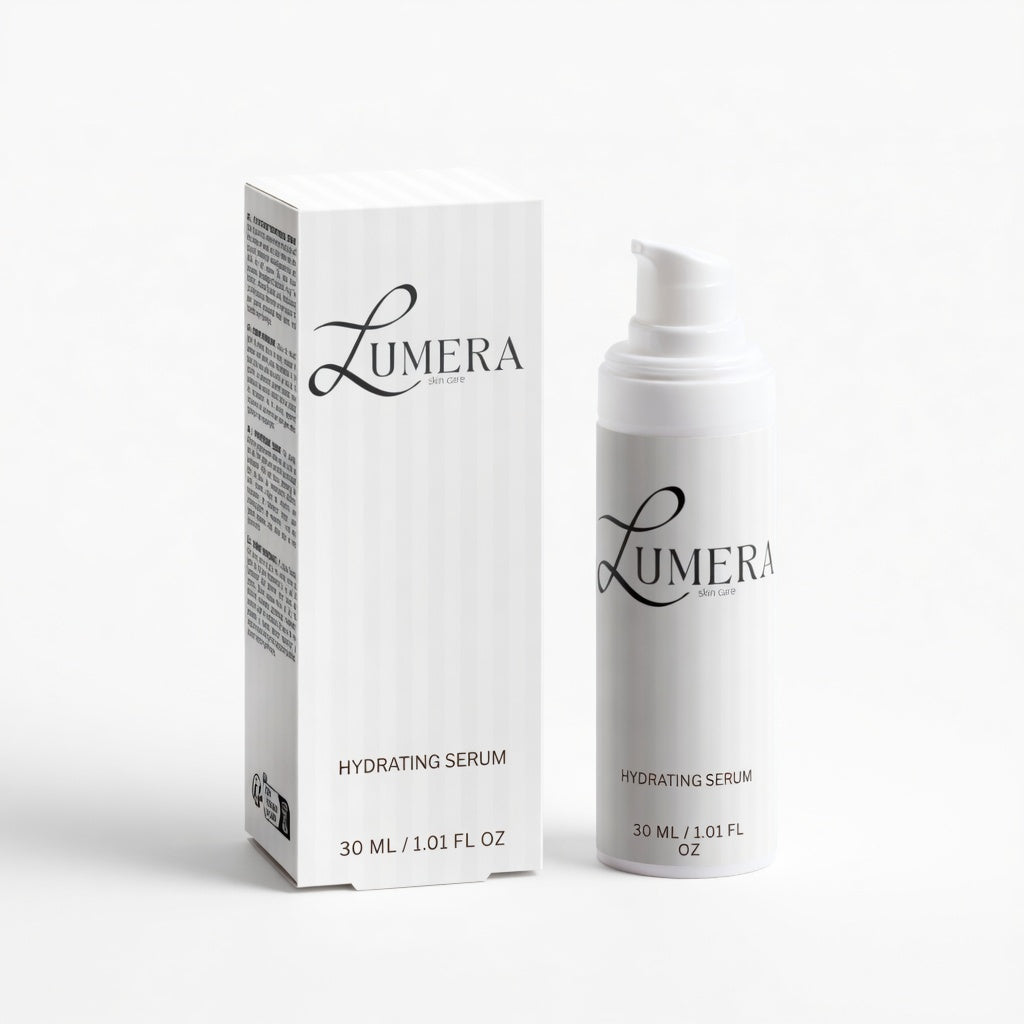
A serum ingredient list is useful when you treat it as information about a specific formula. A headline may highlight one ingredient, but the list shows the wider product you are considering. For LUMERA's Hydrating Serum, that means reading beyond “hydrating” and noticing the oils, extracts, fragrance and other named ingredients as well.
The displayed INCI includes glycerin, Betaine, Hydrolyzed Hyaluronic Acid and Sodium Hyaluronate. Bisabolol, Peony Root Extract and Cloudberry Fruit Extract are also listed. These names identify ingredients in the current formula information; they do not provide exact concentrations or demonstrate how the finished serum performs for an individual.
Match the list to the exact product
Start by checking the product name at the top of the page. Several skincare items can share an ingredient headline while remaining different formulas. Save the product name beside the ingredient list so a later comparison does not mix a serum with a cream or booster.
When the product arrives, compare with the current pack. If a detail differs from an earlier screenshot, ask for clarification using the complete name and the label in front of you. The useful question is specific: “Which ingredient list applies to this product?” It is clearer than asking whether a whole range is “clean”.
Read the wider formula
The serum also lists aloe leaf juice, jojoba seed oil and rose flower water. That gives a more complete picture than assuming every serum is an oil-free liquid containing one featured ingredient. The list is worth reading as a whole, even when the headline already sounds familiar.
Do not turn the presence of hyaluronic-acid ingredients into an estimated strength, a precise molecular-weight claim or a guaranteed skin-depth effect. Those details need their own evidence. You can recognise the names without inventing measurements that the displayed list does not supply.
Address fragrance plainly
The current displayed INCI includes Parfum, Limonene, Geraniol, Coumarin and Linalool. A feature headline elsewhere uses no-fragrance wording, but the ingredient list does not support choosing this serum as fragrance-free. Keep that conflict visible when making your decision.
If fragrance-free is a firm requirement, do not use a general hydrating description to fill the gap. Ask for the current formula information or choose another product that meets your documented requirement. An attractive texture description does not resolve an ingredient question.
Compare another formula rather than another headline
Antioxidant Ginkgo Gel Booster contains Ginkgo Biloba Leaf Extract, Green Tea Leaf Extract, Oak Bark Extract and Grape Seed Extract in its displayed ingredients. Its formula should be read separately; hyaluronic acid is not listed there despite a generic feature claim.
Smoothing Eye Cream has its own displayed ingredients, including Sodium PCA, shea butter and hyaluronic-acid ingredients. It also lists Parfum. A shared ingredient does not make it interchangeable with the serum, and an eye-area product name does not establish a clinical test or universal suitability.
Keep a short ingredient note
An original comparison note can have three lines: “ingredients named on the page”, “requirements I need to check” and “questions still unanswered”. For this serum, the first line records actual ingredient names; the second might record a fragrance requirement; the third can ask about the current pack list.
Browse the LUMERA skincare collection with those notes beside you. Ingredient reading becomes more useful when it supports a clear decision, rather than a search for one impressive word. A formula you understand is a better starting point for shopping than a headline you have to interpret.
CTPA describes standardised INCI names used for cosmetic labelling. The current pack's complete information remains central to an informed purchase. Read the source.

Leave a comment
This site is protected by hCaptcha and the hCaptcha Privacy Policy and Terms of Service apply.